
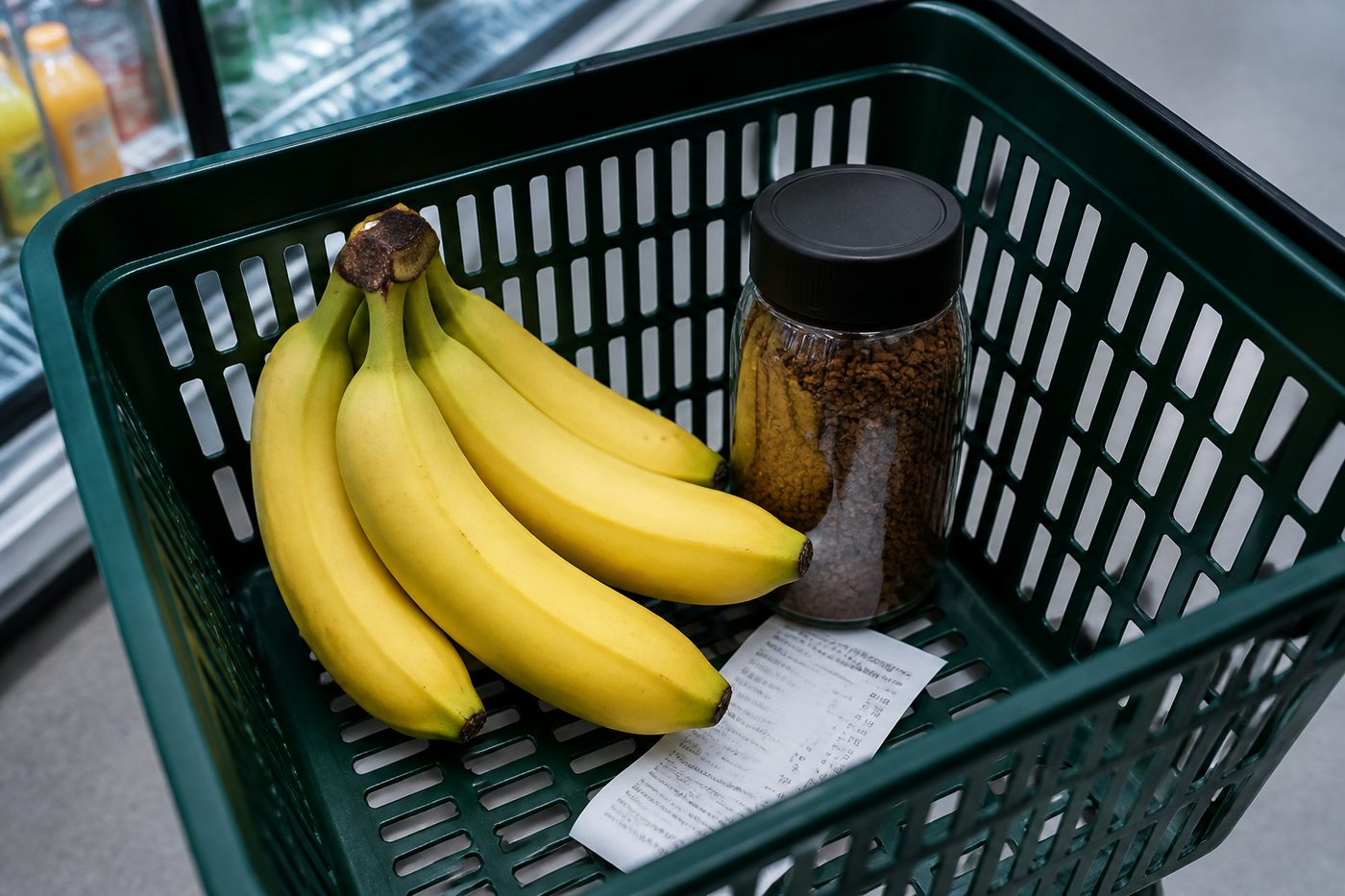
On 14 November the news say the American president had rolled back tariffs on more than two hundred foods, including coffee, beef, bananas, orange juice, cocoa, and tea. I read the list in the kitchen while someone was putting bananas into a bowl, which made the headline feel almost rude. If the tax come off, the fruit should get cheaper. That is the tidy version. The bananas did not change colour. They also did not change price.
Economists, the people who get quoted after a decision like this, say prices would stay high for months. Shops are still selling stock they bought when the tariff was sitting on top of the cost. They paid the higher number already. They are not going to mark the shelf down out of gratitude the same afternoon the White House change its mind. Brazil, which send a lot of coffee, still faced a steep remaining duty at first, so even the “cut” was not a clean ending for every bean.
In Business this is the sticky-price problem, except the textbook make it sound like a diagram and the fruit bowl make it sound like a delay. A sticky price is one that do not move as quickly as the news. It stick because the shop already committed. The warehouse is full of tins and boxes purchased last month, at last month’s cost. If they drop the price now, they lose money on goods they have already paid for. If they wait, they look as if they ignored the government. Most shops will wait, and then they will wait a little more, and they will call it caution.
I used to think a tariff and a price were the same sentence. The government add a tax, the till go up. The government remove the tax, the till come down. That only work if the thing on the shelf was bought today. Most of what we eat was bought, shipped, roasted, or packed earlier, by someone who had to guess what the tax would be. Guessing is expensive. So is being wrong. So the grocery bill stay where it is, and the headline look like a promise the receipt has not heard yet.
Coffee is the one I keep coming back to, because I already wrote about beans and Starbucks last month, and I dislike unfinished stories. A tariff cut on coffee should help. A leftover duty on Brazil should not. Both can be true in the same week, which is why I am learning not to trust a single word like “cut.” Cut compared with what? Cut for which country? Cut starting when the next ship arrive, or cut on the jar that is already in the cupboard at the back of the shop?
My mum still bought the same brand of tea. I watched her do it, and I did not say “the tariff came off, you know,” because that would have been a Year 9 showing off in the cereal aisle. The price was the price. She has a budget that do not refresh itself because a politician had a better week. Sticky prices are not only a theory about firms. They are also a habit in a household. You buy what you bought last time until the number on the label is impossible to ignore.
If I want to study finance, I have to get used to lags. Money decisions have a delay built in, the way a story has a middle before the ending. The White House can change a tariff on a Friday. The grocery bill change when the old stock run out, and when a shop is brave enough, or scared enough of the shop next door, to be first. Until then, the bananas sit there, looking innocent, costing what they cost yesterday.