
Friday night, and I finally buy the anthology I have been borrowing from the library in pieces. The shop have a new one with a stiff spine, and a used one with a faded price inside the cover, almost half. I take the used one, because I have been practising the sentence “price is what you pay,” and because I like a book that already look lived in.
What I do not budget for is the pencil.
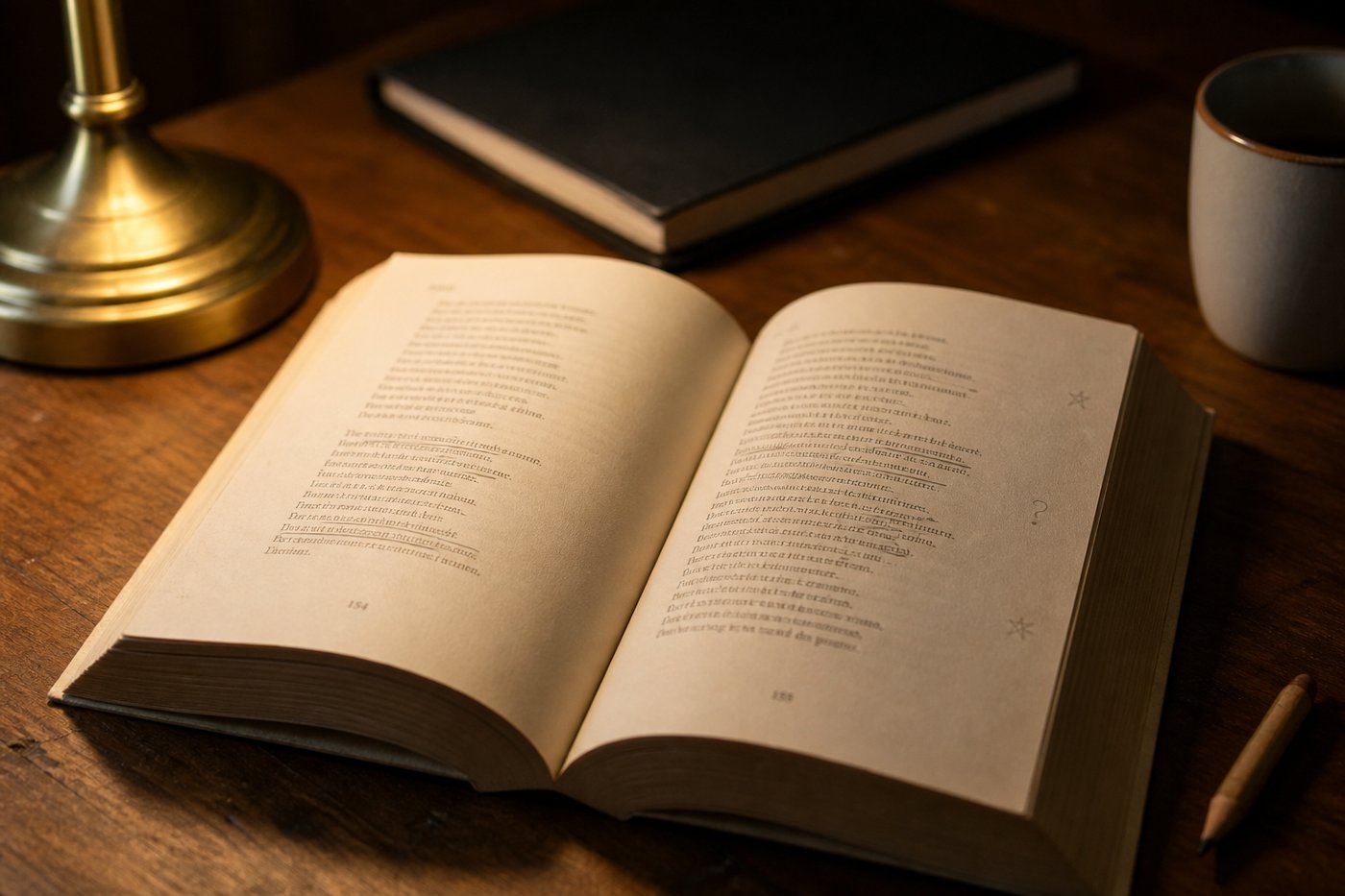
Whole stanzas are underlined, some twice, as if importance can be made thicker. In the margin there is a tiny “theme??” and a star that look drawn in a hurry, the way I draw stars when I pretend I already understand. The previous owner probably sit an exam, or get ready to sit one. Either way, they leave a map on my pages.
In Business we talk about second-hand goods as if the only thing that transfer is the object. A used book should be the same poems, only softer at the edges. This one is not quite the same product. It come with a stranger’s decisions about what count. I keep catching my eyes follow their lines before I choose my own, which is an efficient way to read and a lazy way to think.
I try to ignore the marks. That is harder than it sound. A line that is already dark look more official than a line that is only ink from the printer. I find myself agree with a star I do not put there, and then I feel slightly cheated, as if I pay for a quiet copy and get a conversation I do not join.
The poems are still the poems. I know that. Value is supposed to be what I get, and I do get the same words for less money, which is the kind of bargain the part of me that want to study finance is supposed to like. I just do not expect the discount to include someone else’s confidence.
I am reading with a blank card over the margin tonight, which look a bit dramatic on the desk. Tomorrow I can decide whether to keep the pencil or treat it as noise. For now I want the cheaper book to be mine long enough that the stars start to look like weather, not instructions.