
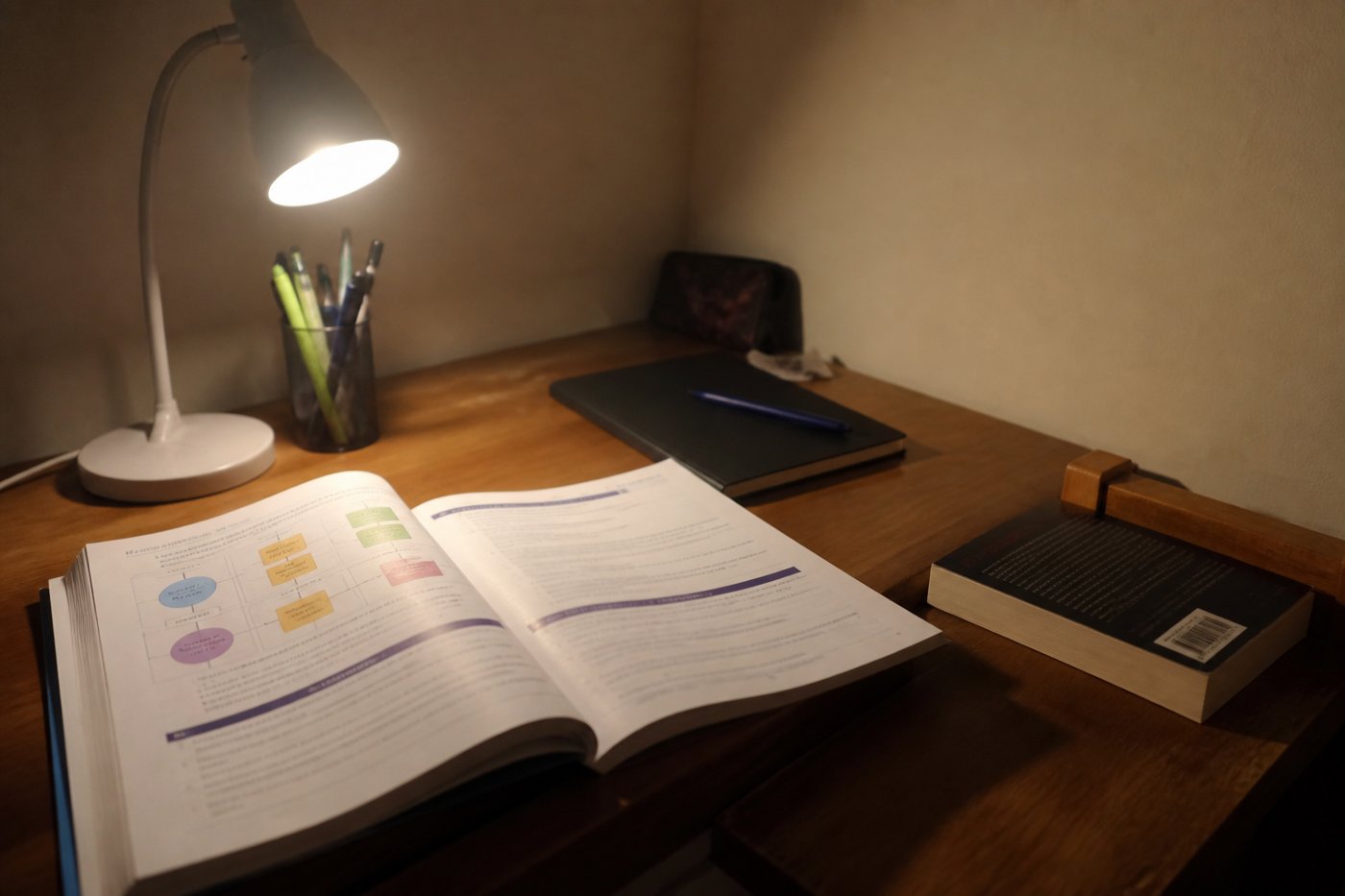
The Business book use a holiday again. Two weeks at the beach, or a new laptop, and you cannot have both, which is how they introduce opportunity cost. I copy the definition into my notebook because that is what you do with definitions, and then I sit there with the sentence looking too clean.
A holiday is a useful example if you never have to choose one. The cost of the beach is not the ticket. It is the laptop you do not buy. I understand that. I can even write it in an exam without make it sound like a speech.
What the page do not mention is a smaller version of the same problem, which show up tonight and do not bother to look like economics.
I have forty pages left in a library book that is due Thursday. I also have this chapter, and a Maths exercise I tell myself I will finish before I get comfortable. If I read, the homework wait. If I do the homework, the book wait, and Thursday is still Thursday. That is opportunity cost without a palm tree in it.
The annoying part is that both choices look responsible from far away. Reading is for World Literature, in a roundabout way. The chapter is for Business, which I actually need if I want study finance later. I like telling myself I am the kind of person who can do both if I just sit up straighter. That is not a plan. That is a wish wearing the clothes of a plan.
I choose the chapter. The novel is face down on the chair, which is a rude way to treat a library book, but I do not want the cover looking at me. Tomorrow I can read on the bus, which is a sentence I use before, usually about a different book.
The definition is still in my notebook, copied in my neatest handwriting, as if neatness is the same as understanding. I think I understand it better when I close the novel.