
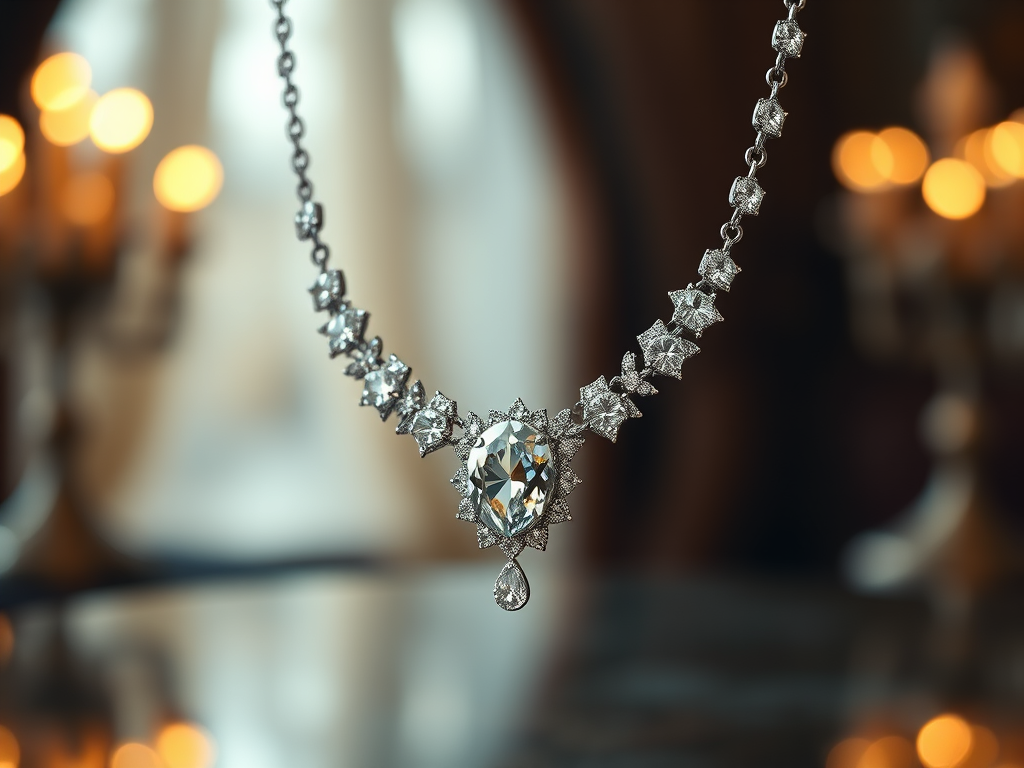
When I first wrote about The Necklace in a writing practice, my first sentence was: “Ten years for nothing.”
I thought it was simple. The necklace was fake. Mathilde paid ten years for a diamond that was not real. I thought the story tells us: do not be proud.
Now I think it is not so simple.
The stone was cheap. But the debt was real. The small room was real. The work was real. Ten years of her life was real too. A fake thing can still change a real life.
In Business class we learn that price and value are different. Price is the money you pay. Value is what you think you get. Mathilde pays a lot of money for a new necklace. But she is not really paying for the diamond. She wants to keep a picture of herself — a person who can wear beautiful things and stand in a rich room.
That picture also has a price, but no receipt shows it.
People forget the husband. He gives the money his father left him. He borrows more money. He works at night copying papers. The necklace was Mathilde’s wish, but the debt becomes the life of both of them. Sometimes one person starts the price, but more people pay it.
At the party, the necklace works. People think she belongs there. For one night, a fake stone gives her a real feeling. This makes me feel strange. The necklace does its job. So the problem is not only that the value is fake. The problem is a fake value can still make real things happen.
Before, I thought Mathilde was only vain. Now I am not so sure. Wanting people to see you is not the same as wanting money. I also understand the feeling to walk into a room and not need to explain where you come from.
I think about my own life too. A drawing commission has a price, but the third change and the waiting are also cost. A school blazer has a price, but the feeling of belonging is not on the tag. A subscription goes up two dollars, but the real cost can be the work to leave it.
The number on the bill is only part of the cost.
Her debt is much bigger than mine, but the idea is the same. She does not pay for glass. She pays because she believes the glass can change what people think she is worth.
My old draft asked: why did she not tell the truth? I still think it is a good question. But there is a harder question: who told her she needs an expensive thing to be worth something?
I kept the old draft. I did not change the title, because “Ten years for nothing” was my first idea.
Now my answer is different. The necklace was fake. The ten years were real.