
I left my lamp on again while I was reading. My mum say the sentence she always say, the one about the bill, and I almost answer that a lamp is not a war. Then I see the Ofgem headline and shut my mouth.
On 27 May, Ofgem say the UK energy price cap will rise 13% from 1 July. For a typical dual-fuel household paying by direct debit, that is £1,862 a year — about £221 more, or £18 a month. The cause was a roughly 25% jump in wholesale gas after the US–Israel war with Iran disrupt the Strait of Hormuz. That narrow stretch of water usually carry about a fifth of the world’s oil and gas. About 33 million households on variable tariffs in England, Scotland and Wales will feel it. If you are on a fixed deal, you do not, until the fix end.
£18 is a streaming plan. It is also a lot of lamps. I hate that my brain do that now, turning every rise into something I already recognise.
In Business we call this the external environment, which is a polite name for things you do not get to vote on at the kitchen table. A firm can be careful. A household can turn things off. A shipping lane on the other side of a map can still rewrite the number. Wholesale gas is the price companies pay before it become your bill. When that jump, the cap jump with it. The cap is not a gift and it is not a bargain. It is a ceiling on what suppliers may charge a typical customer on a standard variable tariff. A ceiling can still go up. I used to hear “price cap” and think “cheap.” That was lazy listening. It mean not more than this, and this can be £1,862.
I keep a picture of the strait in my head now, the way I keep a picture of a graph from class. Tankers. A pinch-point. A war I am not in. Then the standing charge, the unit rate, the email that will arrive in July looking bored, as if it were only maths.
People on fixed tariffs get a delay, not an escape. The shock is waiting at the end of the contract like a bill that has not been printed yet. That is another time lag, except this one is heat and light instead of chocolate. I find that I understand the delay better than I understand the war, which is not a virtue. It is just the scale I live at.
I will still leave the lamp on sometimes. I know that about myself. I will also think about Hormuz when I do it, which is a strange thing to add to a reading habit. The bill is how a far-away shock get into a kitchen. The cap is how official language say we see it, we are limiting it, and it is still going to hurt.
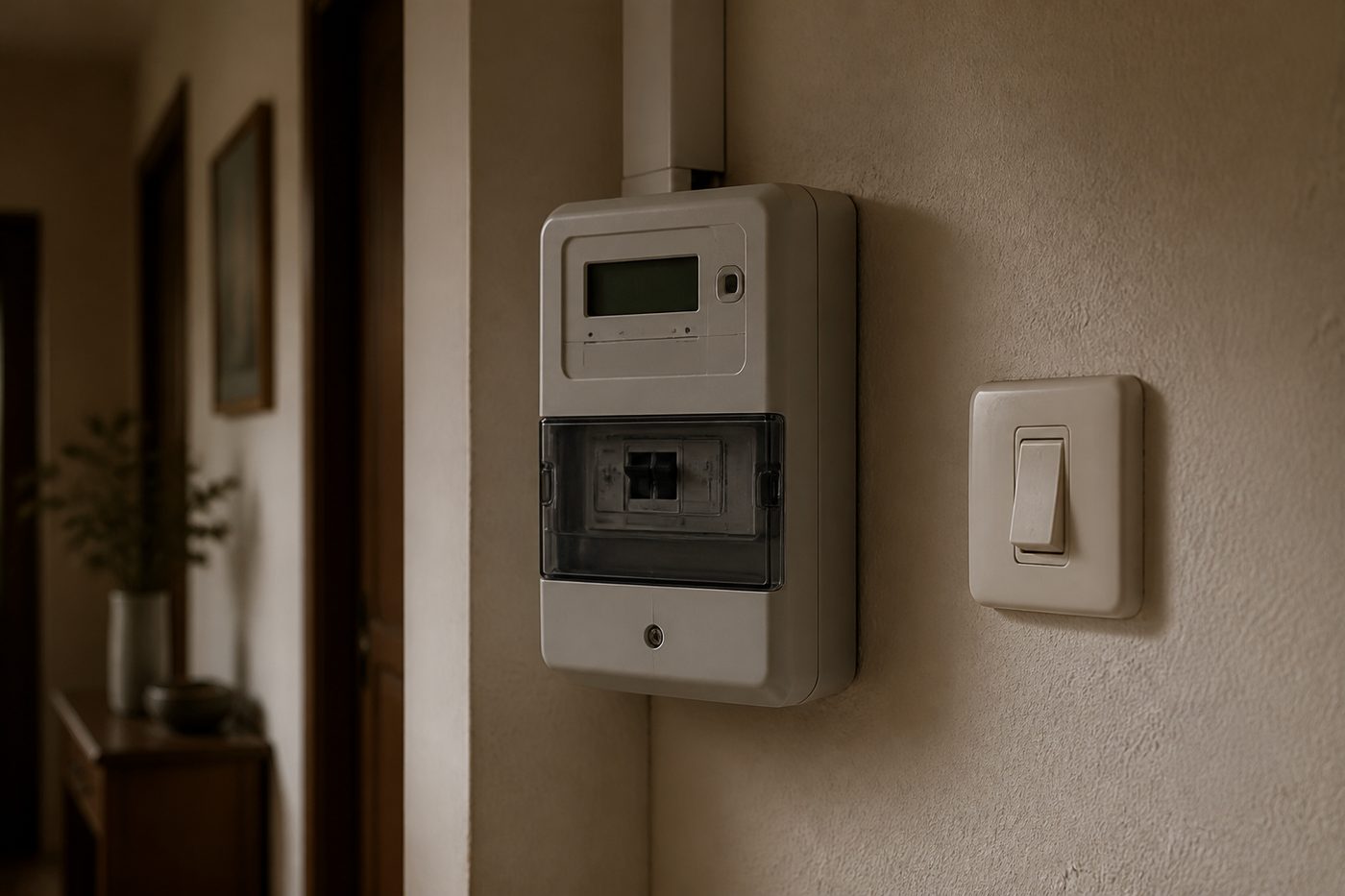
Someone at home will say we should put jumpers on, which is a sentence that used to sound like nagging and now sound like a forecast. I will still read with the lamp. I will also look at the meter in the cupboard as if it had a map inside it.
Eighteen pounds a month is not the war. It is the receipt the war can reach.