
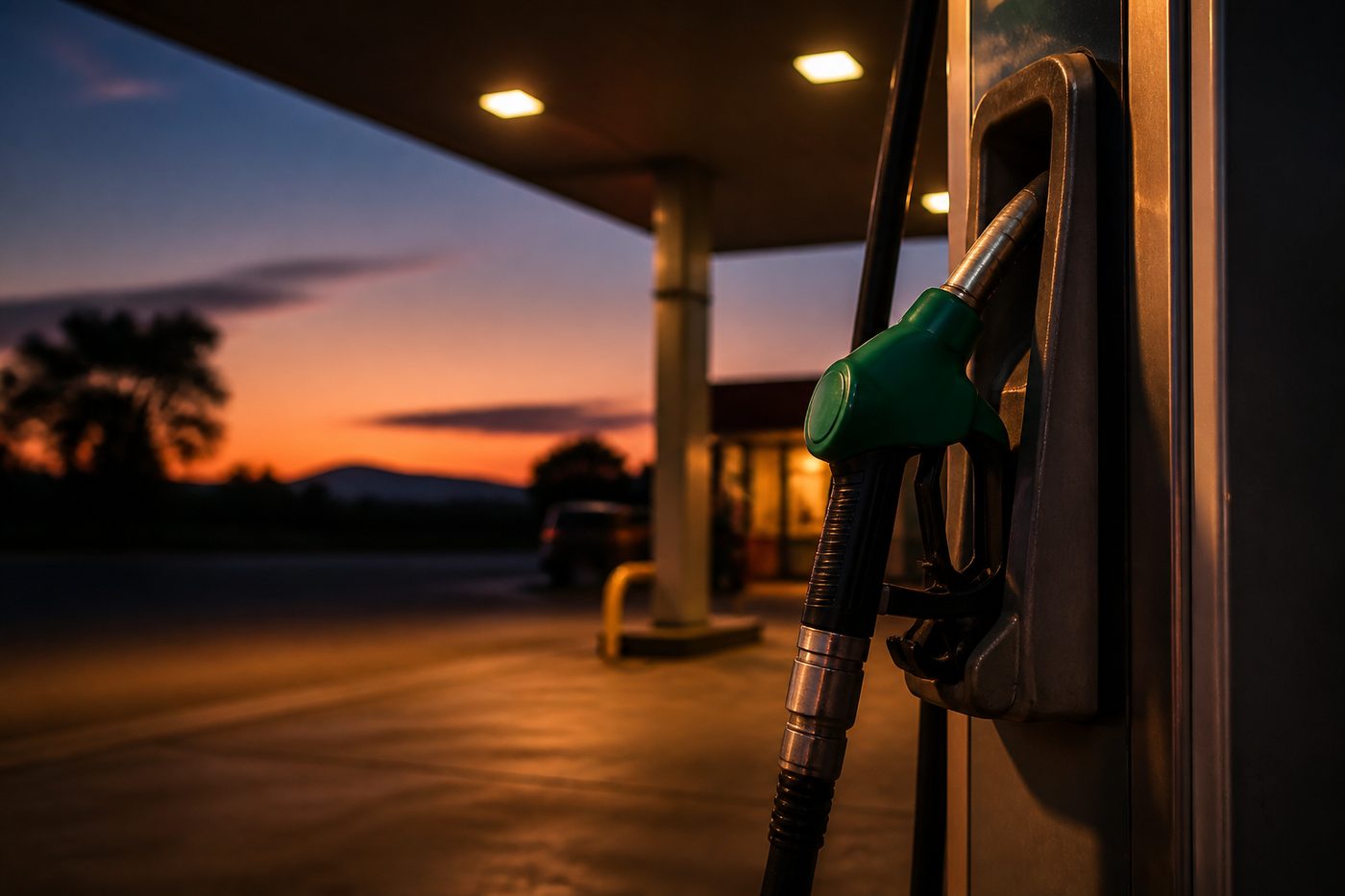
I saw the American petrol headline the same week people start packing the boot for Christmas, which is an unreasonably specific kind of timing. The AAA average for a gallon of regular petrol was about $2.85 to $2.90 in late December, the lowest since March 2021. They expect more than 100 million people to travel by car over the holidays. Brent crude, the oil price the news use as a shorthand, has fallen about 19% this year, the worst year for it since 2020.
I am not in that traffic, but I know the shape of a Christmas car journey: bags, a playlist argument, and a parent doing the quiet maths of whether to fill the tank now or later. Cheap petrol is the rare piece of 2025 price news that sound like a gift. Food has not been a gift. Phones have not been a gift. A tank that cost less than it did four years ago is the sort of thing people mention at the table because they can feel it before they have finished the sentence.
In Business this is supply and demand in a commodity market, which mean a thing that look the same no matter who sell it. Oil is oil. When there is more of a commodity than people want to buy, or less wanting than there used to be, the price fall. I am not going to pretend I can see every reason inside this year’s 19%. I can see the pattern the textbook is pointing at. Petrol follow oil more quickly than a banana follow a tariff. There are fewer stories in between. You refine it, you put it in a station, you write a number on a board that drivers can see from the road.
That speed is the contrast I cannot leave alone. Coffee, beef, and the rest of the grocery list spent the autumn learning how to stay expensive. Tariffs sat on beans. Shops sat on stock they had already paid too much for. A litre of petrol, or a gallon if you are reading the American figures, do not wait in a warehouse wearing last season’s tax in the same way. When oil has a bad year, the board change. When food has a complicated year, the receipt stay stubborn.
I watched my mum put money into the car and then, the same afternoon, mutter at the price of something small in a food shop. That is the whole year in two errands. Fuel, at least in the American numbers, got cheaper. Dinner did not, because dinner is not only a commodity. Dinner is a brand, a tariff, a delay, and a shop that would rather not be first to cut.
I like this kind of comparison more than I like a single cheerful headline. “Petrol is down” can be true. “Things are getting easier” is a different claim, and I will not sign it. A family driving home for Christmas might spend less on the road and still feel poor in the supermarket car park. Both meters are real. Only one of them is having a four-year low.
If the point of Business is to notice which prices move and why, then December is a decent teacher. A commodity can fall fast. Food, after a year of taxes and old stock, do not have to follow it. I can hold those two facts without turning them into a speech. I can also put a song on for the last bit of the term and be grateful the car is not the only number anyone is watching.